
The new year is an excellent time to review and freshen up your maintenance practices to set your team up for success. January is a (relatively) quiet time that offers a chance for you to focus on strategic planning.
Take advantage of the brief periods between snow removal and winter event setups. The plans and procedures you create now can make a huge difference when the growing season begins.
Not sure where to begin?
Here are five things you can do to help your park maintenance team get aligned and thrive in the new year.
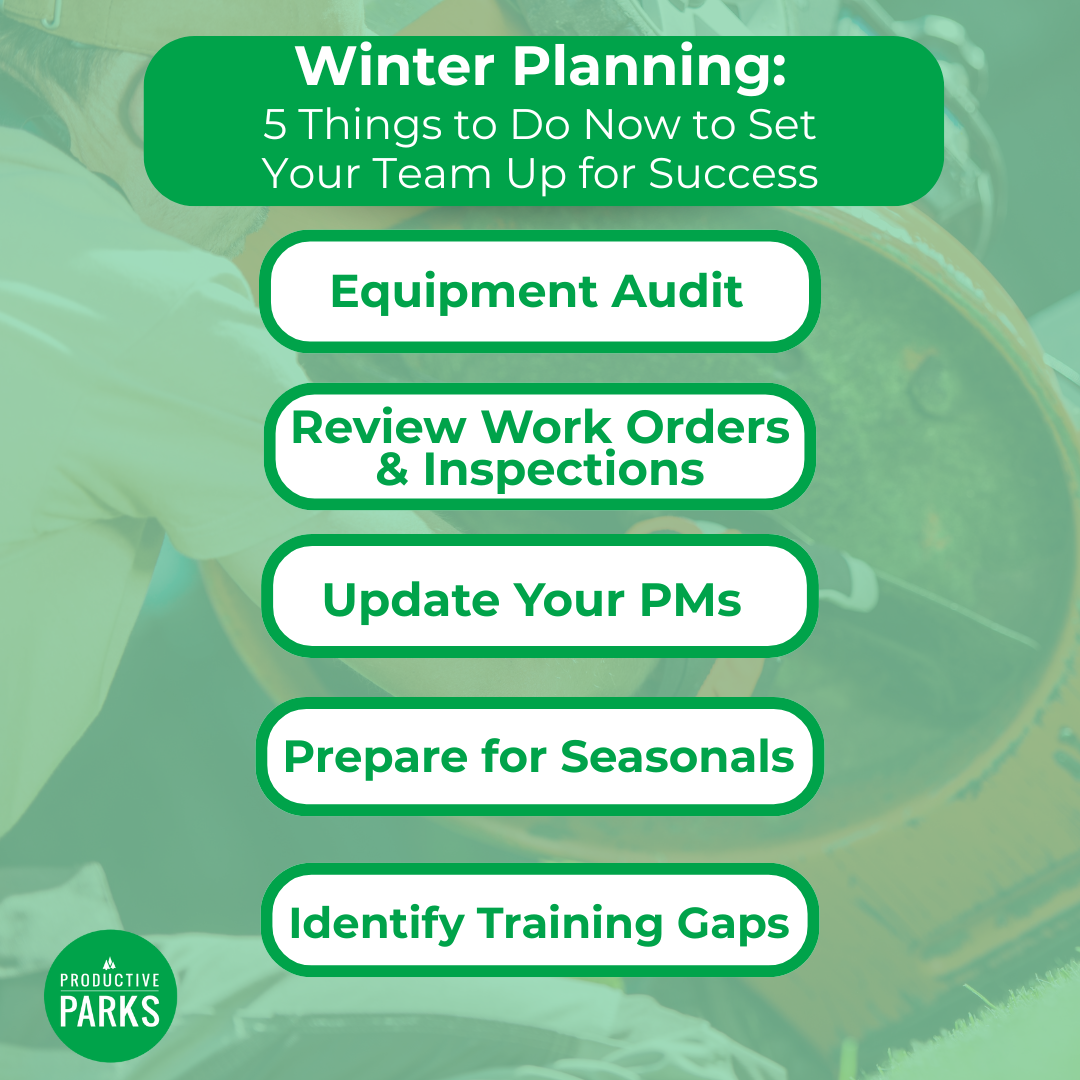
Equipment Audit
Walk through your shop and storage areas with purpose and a critical eye. Start by labeling your existing equipment into categories like “repair”, “replace”, and “good to go.”
Also, take inventory of your replacement parts and other necessary supplies to maintain your equipment.
List any problematic equipment that breaks down more frequently than others. Decide whether it is more cost-effective to replace troublesome equipment than to deal with downtime and schedule disruptions while it is not working.
If you need to replace, start pricing new equipment now to avoid panic buying in the spring.
Review Work Orders and Inspections
The past year's work orders and inspections can provide valuable insights to help you plan for next year. Take some time to review past work requests and completed tasks. Look for recurring issues, items that can be addressed through scheduled preventive maintenance, and other ways your team can stay on top of avoidable problems.
If your work order history is filled with vague requests like “weed whip is not working” and then the follow-up message was, “weed whip is fixed,” then it is time to review work request procedures to get more detailed information.
For example, more detailed records on that broken weed whip could help you determine if it is a mechanical issue or related to usage. You know, like a particularly rough seasonal work that likes to swing things around too hard.
Train maintenance and non-maintenance staff to describe issues in detail. Encourage them to provide pictures or videos for better clarity.
Once a work request gets resolved, have the maintenance staff detail their work. Encourage them to include visual instructions, such as photos or videos. The little extra time spent on documentation creates a reference library that can be a huge time-saver for your current and future park maintenance staff.
Similarly, inspections can contain valuable insights about your assets and equipment. Thorough, regularly scheduled inspections can detail the changing conditions of your equipment and assets, as well as the issues and challenges they face.
Like work requests, inspection information is only as good as what gets documented. A set of checked boxes may not tell you much. Details of issues identified during inspections–and corrective action taken–can inform future planning.
Update your PMs
Based on your review of work orders and inspections, you may identify adjustments to your preventative maintenance schedule.
For example, if you’re consistently performing the same type of playground surface repair, should staff check and care for the area more frequently to address the issue before it requires a more involved repair?
Also, schedule equipment servicing well before the busy season to ensure your mowers and other landscaping equipment are ready to go.
Plan detailed inspections of playgrounds and park amenities to establish a baseline of their condition before the busy season.
Prepare for Seasonal Staff
The marketing team is likely preparing campaigns to recruit seasonal workers. You can also plan to ensure the seasonal onboarding process goes well.
Start by determining when you need your seasonal staff at full strength. As we all know, the growing season can creep up on you quickly. Having your seasonals trained and ready will make a huge difference when the park maintenance team needs to tackle mowing and other landscaping tasks.
Next, review the seasonal workers’ performance from last year. Were they slow to get out of the gate? Was there additional training you wished you had provided? Were there any incidents or issues that arose while the seasonals were settling in? Use this information to refine your training.
Also, identify the strong staff who have a knack for training others. Get feedback from those staff about how to improve training and deploying seasonal staff.
Effective seasonal staff training can have a major impact on this year and beyond. After all, a positive experience for a seasonal worker may lead to a strong future full-time employee.
Identify Training Gaps
As you review your seasonal worker training, also look for any training gaps your entire team may be experiencing.
Review what training gaps hurt your team last year. For example, did a splash pad experience water quality issues or equipment failure? Is there additional training you can provide your team to ensure these issues don’t happen again?
Make sure your maintenance team is properly operating and maintaining equipment. Adding a training session or a new weekly inspection can help prevent breakdowns when you need the equipment most. Scheduling training with vendors or including some online training can be a great opportunity during the winter months.
Get feedback from your maintenance team on their comfort levels for various tasks. Equip them with the knowledge to address issues without having to “wing it.” The more they know, the better they will perform.
The Takeaway
These five tasks are an investment in your maintenance team’s performance throughout the year. Some extra work now empowers your team to be more confident and proactive. They’ll be less reactive when things get busy and better prepared to care for assets and equipment.
Take action now! Get started on one of these tasks this week. Your spring self will thank you for the time you invested now.