
Do I need a CMMS for my parks and recreation agency?
At some point, you may wonder if it’s time to move beyond spreadsheets. See what technology is available to help with maintenance planning and record-keeping.
What if what you’re doing now is working…but not necessarily to its fullest potential? Your team is getting most of the work done, but there are times when something gets overlooked, or documentation is hard to find.
Of course, some people are reluctant to try something new. They might not see the value of technology or software for park maintenance. They don’t understand the potential benefits.
In this article, learn 9 signs that your maintenance team may need to replace spreadsheets with software dedicated to maintenance management. See how software can be the next tool that benefits the maintenance team and your parks and recreation agency.
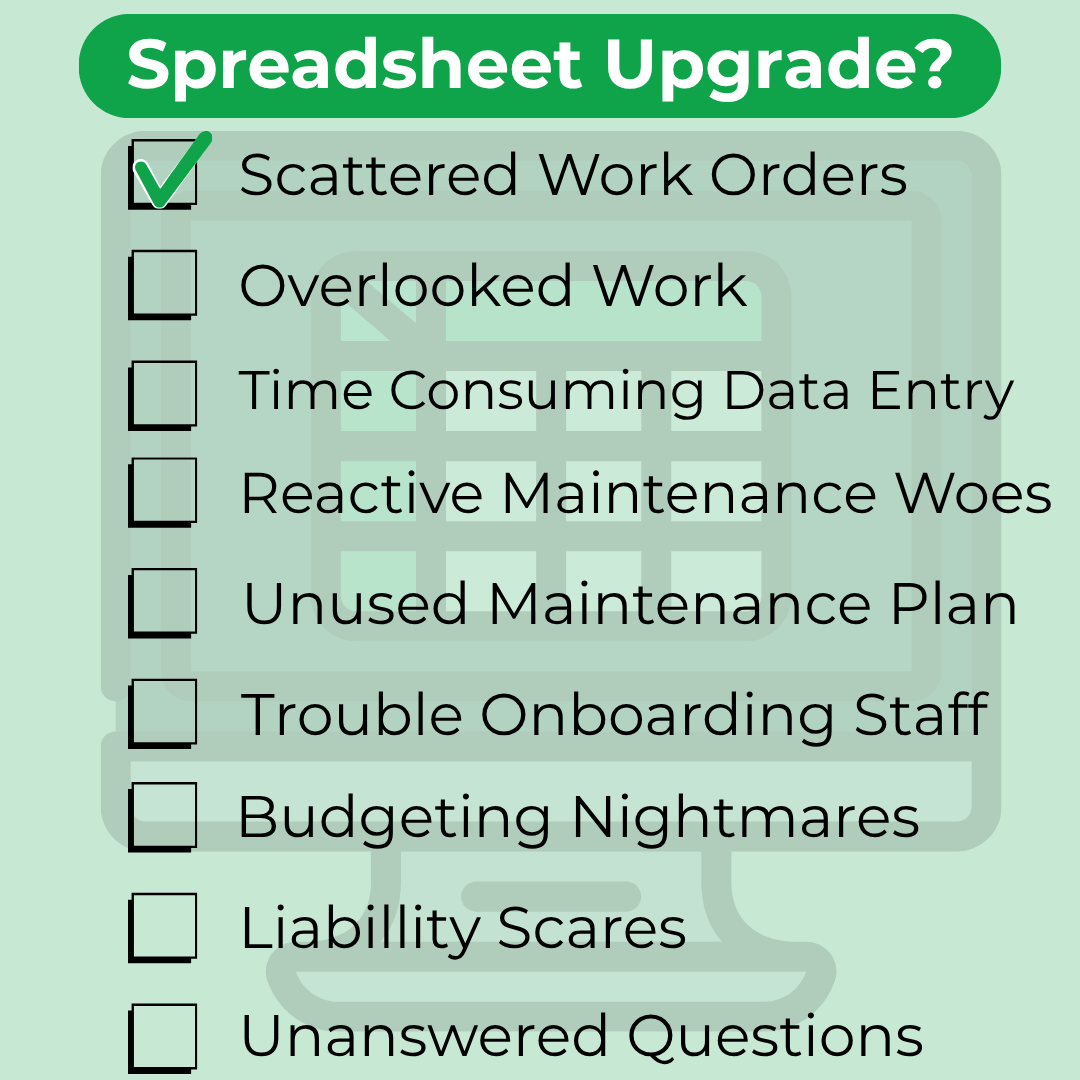 Scattered Work Orders
Throughout the day, your park maintenance manager has to shift attention among phone calls, texts, emails, the overflowing inbox on his shop desk, and chance encounter meetings in the hallway. The manager awkwardly juggles these requests that seem to be coming from every direction.
Most people can only effectively juggle for so long.
Maintenance teams thrive when there is a central location for all work requests. And, more importantly, a place for the maintenance manager to quickly reference all requested work so it can be prioritized and assigned.
Overlooked Work
On any given day, a park maintenance team can have its schedule upended. An urgent work request requires the team’s attention. Preventative maintenance gets deferred to handle an emergency repair. Bad weather throws off the workflow.
But are the spreadsheets helping to minimize these issues? Does everyone have an easy way to know what they are supposed to do for the day? Are they alerted when they have outstanding tasks? Does the maintenance manager have a quick way to reassign and communicate missed work?
Spinning Wheels with Data Entry
How much data entry occurs over the life cycle of a work order?
For example, someone fills out a paper form to request a repair. That information gets entered into a spreadsheet and gets added to the maintenance team's to-do list. The staff does the work and fills out another form, which is then entered into a spreadsheet. At the end of the month, someone types out a report detailing all the work done.
That makes a lot of extra work–especially when your team is low on time and resources.
Software can help automate processes and take away some of the tedious data-entry work that robs maintenance teams of the time to tackle bigger issues.
Your Maintenance Plan Looks Great, But It’s Not Getting Done
Maintenance plans are an excellent way to shift the focus from reactive maintenance to preventative maintenance.
Unless they aren’t being executed.
A spreadsheet with a perfectly outlined and color-coded maintenance plan looks great. If the maintenance team doesn’t understand how it fits into their day-to-day along with all the other things that come up, it’s just another pretty file sitting in a hard drive.
Technology can help bring a maintenance plan to life by automating the assignment of routine preventative maintenance tasks to the team. Historical data collected by maintenance management software can also help teams plan more effectively by identifying seasonal issues or specific tasks needed for the different assets.
Reactive Maintenance Hijacks Schedules
Maybe you are implementing your maintenance plan, but it gets sidelined by urgent requests. Some preventative maintenance tasks keep getting deferred, which actually leads to more reactive maintenance.
Sometimes the loudest voice or most recent call isn’t the most pressing task. Software can help maintenance managers assign and prioritize incoming work requests more efficiently, so preventative maintenance doesn’t take a back seat to less urgent requests.
New Hires Have Trouble Understanding Duties
How do new hires learn Standard Operating Procedures (SOPs) during onboarding and as they acclimate to your organization? Do they pour through a big binder during the first week and you assume they retain all or most of the information?
That binder might have a lot of great information. But can it be accessed from the field when a question comes up? Are routine tasks outlined to ensure nothing gets overlooked?
Software can help staff easily reference the steps of their daily work on their preferred device. They log in, see their tasks, and check the notes so they know exactly what to do and how to do it.
Budgeting Time is a Nightmare
You have a general idea of what you need for next year’s budget, but you don’t have the historical data to back everything up…at least not in an easy-to-assemble and present format.
Instead, you have a file folder of receipts, some scanned invoices from contractors, and labor cost estimates based on what you remember from the growing season. And then you have to account for unforeseen reactive maintenance expenses like emergency repairs, staff overtime, and express shipping for replacement parts.
Sure, you can compile it into a spreadsheet and maybe even then use AI to create a presentation, but you have a million other things to do.
Maintenance management software creates reports you can use for planning, budgeting, and highlighting your staff’s work.
You Had a Liability Scare
Something bad happened, and now the park maintenance paperwork is taking center stage. Can you find all the playground inspections where the incident happened? Do you have easy access to the repair records and preventative maintenance for the HVAC system that just failed in the recreation center?
Tracking down old paper inspections can be a nightmare. Pouring through spreadsheets may be a little easier if everyone updates them correctly. Do you have the time to do it, though?
Maintenance management software can pull up inspection records and repair history for a specific asset with just a few clicks…no frantic searching the shop or your Dropbox contents.
You Can’t Answer the Tough Questions
Questions during a board meeting. An email from risk management. Your boss wondering why there was a huge program disruption. You're left struggling for answers because you aren’t sure.
The spreadsheet lays out the work the team should do. But are there records of everything being done? Are they being filled out consistently? Is anyone regularly monitoring what’s going into the spreadsheet?
And is there a way for staff to quickly report issues–even minor ones–before they get back to the shop? A lot could happen over the course of the day, and things can be easy to forget.
A centralized location where all information is stored allows you to access and analyze data that will help you walk into any situation more confident that you can provide the answers.
Sound Familiar?
You have great procedures in place. Your maintenance plan is carefully outlined. You built a hardworking team that you can trust. Things are going well in your park maintenance department.
But…
There is room for improvement. Options to make things run smoother. Ways to help everyone communicate a little better.
And while software won’t solve all your problems, it is a tool for more efficient workflows, more effective communication, and a central location to access all your records. Time saved allows you and your team to tackle more pressing tasks than tracking down a playground inspection from two and a half years ago. See how maintenance management software can help you.