
Park maintenance departments face a common problem. There is too much to do and not enough time and resources to do it. Maintenance managers face difficult decisions about what work needs to be done and what has to be shelved for another day.
But there’s a problem. Deferring maintenance could lead to even more costly and time-consuming issues. That smaller repair that doesn’t take priority has ballooned into a major structural replacement. Or maybe that bit of graffiti noticed at one of your smaller parks multiplies into an unsightly mess.
The backlog problem isn’t unique to the parks and recreation industry. There are, however, unique circumstances that park maintenance departments face that can contribute to the deferred maintenance in parks and recreation agencies.
In this article, learn more about maintenance backlogs, reasons park districts and agencies fall behind, and some practical steps to address deferred maintenance.
What is a Maintenance Backlog?
A maintenance backlog is the total work that has been identified but not yet completed. This could include findings from park inspections, work requests from the recreation center, tasks awaiting replacement parts, and work that is labeled low priority.
Deferred tasks can be intentional or invisible. Intentionally backlogged work is work that maintenance managers are aware of, but choose to push into the future.
More dangerous, however, is the invisible backlog. This is work that the maintenance team is not aware of–necessary work that goes unnoticed. This could be due to a missed inspection, an undelivered work order, or poor communication throughout the agency.
For example, a seasonal worker notices a small leak at a baseball field concession stand. They don’t think much of it or are not aware of the work order process, so they go about their day without reporting it. The issue continues to go unnoticed until the athletic manager notices significant water damage near the leaky pipe. By then, it becomes a costly emergency repair, causing the maintenance manager to have to shift schedules and routine tasks to address it.
Reasons Small Park Districts Fall Behind
Most park maintenance agencies don’t have the intention to create an unmanageable maintenance backlog. Having a list of deferred tasks doesn’t necessarily mean negligent or ambivalent maintenance teams. Oftentimes, a variety of challenges cause smaller park districts and municipalities to fall behind. Here are a few examples:
Staffing Shortages/Turnover. It’s a challenge to get everything done if you don’t have the staff to do it. Teams may have trouble filling open positions. Or they may not have enough positions because administrators don’t fully understand the scope of the team’s work.
Also, when experienced, skilled staff leave, they often take years of undocumented knowledge with them. They may know a quick fix for a finicky mower, which section of a trail always needs attention after it rains, or a preventative maintenance schedule for the recreation center’s mechanical systems.
Limited Budgets. In most municipalities, it’s no secret that there is only so much money to go around. Sometimes parks agencies are the first to experience cuts when budgets get tight. The lack of money means fewer resources to complete all necessary work. And, oftentimes, tasks or projects have to be shelved because resources don’t stretch far enough.
No Standard Way to Submit Work Requests: Sometimes things get lost in the shuffle–especially during the busy season. A maintenance team that does not have a systematic way for the agency to request work is more likely to miss work due to it being overlooked, misplaced, or not funneled to the appropriate person.
Seasonal Variables: For park maintenance teams, there is the busy season and then the–relatively–quieter season. During the growing season, it is all hands on deck, taking care of landscaping, restrooms, busy playgrounds, and assisting with special events. When things settle down, there is some opportunity to catch up on backlog tasks, but the maintenance team is reduced to its core.
Reactive Maintenance Focus: Park maintenance teams all face emergency issues and repairs. Without a preventive maintenance plan in place, however, reactive maintenance becomes more frequent and the main focus. Even having a maintenance plan may not be enough. Preventive maintenance tasks that aren’t tied to a complaint or visible failure may be some of the first tasks to get deferred when things get busy.
Hidden Costs of a Growing Maintenance Backlog
Something isn’t maintained well. It breaks down before its time, requiring costly repairs and service disruptions. These are the more obvious costs related to a growing maintenance backlog.
But the growing task backlog is probably costing your agency more in other ways including:
- Unplanned downtime affecting programming and events
- Safety and liability issues
- Loss of public trust and participation
- Declining staff morale and higher turnover
- Quicker asset depreciation
- Long replacement part lead times and equipment rentals
- More inefficient assets lead to higher energy costs
Practical Steps to Address Deferred Tasks
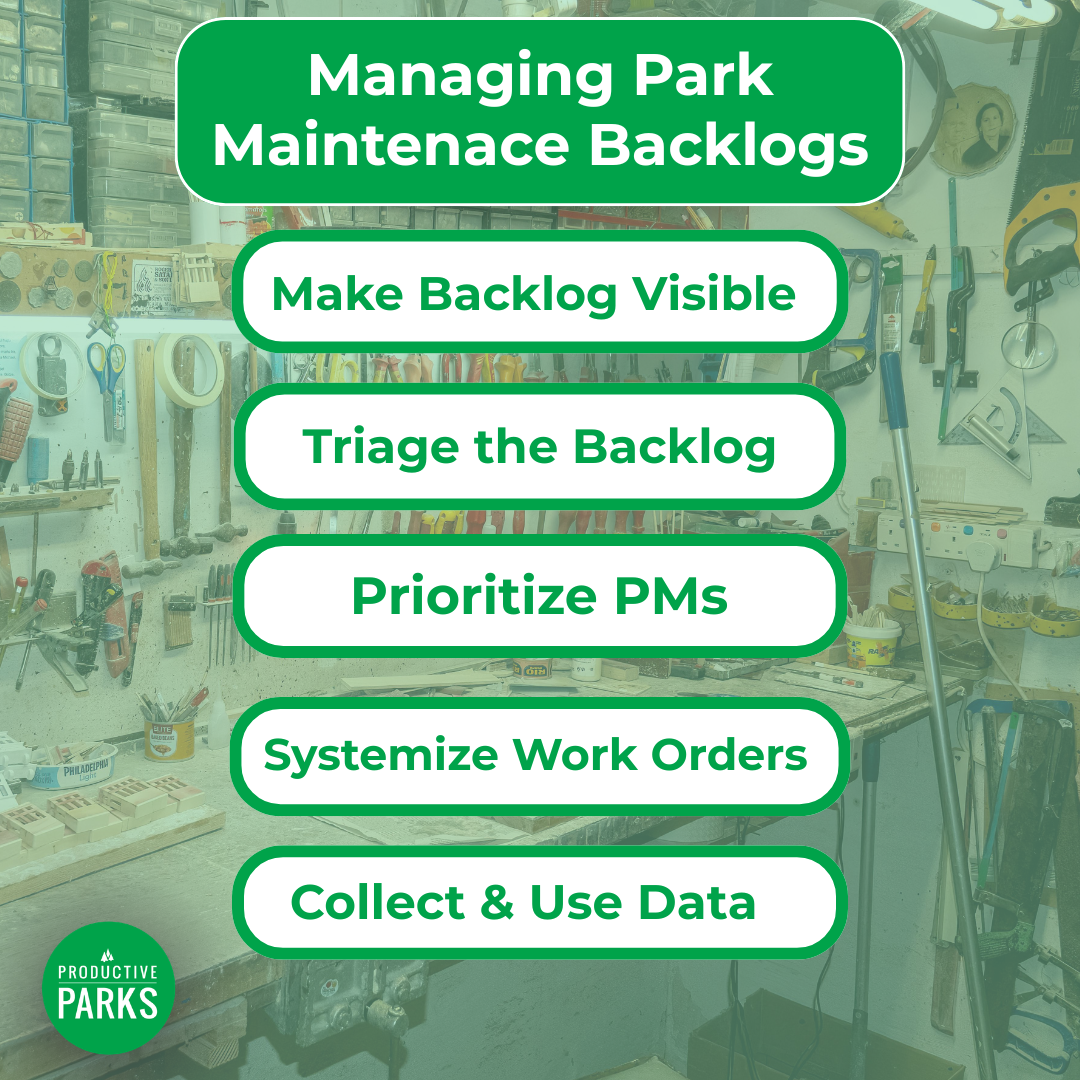 Here are some ways to proactively identify and address your maintenance backlog.
Step 1: Make the backlog visible. Out of sight, out of mind. Begin by documenting your existing backlog to establish a baseline. You may have work orders piling up or a spreadsheet with condition assessments. Seeing the list of work may seem overwhelming, but it’s important to identify the work that needs to be done by the maintenance department. Adding a rough triage (e.g. can wait, needs attention, critical) can help start organizing the backlog.
Step 2: Triage the backlog. After the quick task triage, develop a system to prioritize tasks and help staff identify the most critical items in the backlog. Knowing the priorities of available tasks allows maintenance managers to schedule out work more effectively.
Step 3: Prioritize preventative maintenance. Add more to your team’s plate? Yes, because it will pay off in the long run. We’ve all had times where PM tasks were bumped because something else needed to be done. But neglecting PMs is only going to lead to bigger backlogs. Treat preventative maintenance tasks like non-negotiable scheduled work–like field prep before a big soccer event or mowing a park before the weekend rush.
Step 4: Systemize your paper trail. Have staff log all their work. Make it easy to find completed work requests, inspections, work orders, etc. Documenting maintenance work serves three purposes:
- Prevents work from falling through the cracks
- Creates a reference resource for maintenance history
- Give leadership real numbers to bring to budget conversations
Step 5: Use backlog data to address staffing and budgeting issues. Data may seem a little overwhelming, but it’s going to be key to negotiations. Give decision makers solid data to act on. The documented backlog with estimated costs provides facts and numbers rather than vague descriptions like, “We’re behind on the maintenance for the picnic shelter.”
Another Tool to Address Maintenance Backlogs
Addressing maintenance backlogs requires organization and communication. Luckily, technology and software can help make the work backlog more organized and manageable, removing the cognitive load and stress of mentally juggling everything.
Park maintenance teams often use spreadsheets to help keep track of their assets, conduct inspections, and assign out routes. While spreadsheets are a great first step, most of the time maintenance managers are still actively pouring through the sheets to find the information they need.
Maintenance management software for the parks and recreation industry allows those spreadsheets to come to life. Maintenance managers can set up automatic scheduling of preventative maintenance and inspections, see existing work orders in one spot, and prioritize work. Maintenance management software also gives teams the abily to easily access data and run reports that help with decision making.
The Takeaway
For most parks and recreation agencies, deferred maintenance is an inevitable struggle. Taking a proactive approach with better communication, organization, and preventative maintenance can help reduce the backlog and its hidden costs.