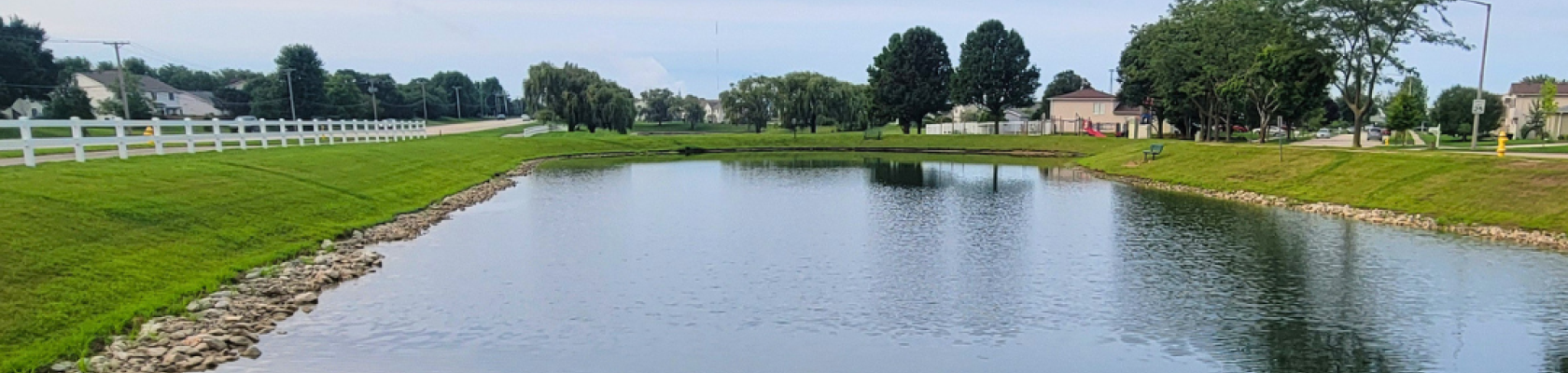
Retention ponds can be a great feature on a park property. They give visitors an opportunity to fish, experience nature, or simply relax by the water.
Retention ponds also help protect property and manage stormwater. They catch and collect rain runoff from surrounding areas. Then the ponds temporarily store the stormwater and slowly introduce it into local waterways.
Maintaining retention ponds ensures they function properly, serve as a healthy habitat, and add to a park visitor’s experience.
In this article, learn more about retention ponds, their common issues, and how to maintain them.
What is a Retention Pond?
A retention pond is a permanent water feature typically built in a low-lying space near building developments. They gather rainwater and release it slowly and steadily into local waterways.
Retention ponds are an important part of an area because they help prevent localized flooding through a controlled release of rainwater. Retention ponds can also collect sediment and pollutants, keeping them out of local rivers.
In contrast, a detention pond is usually dry. Detention ponds are made to temporarily store water during heavy rains. That water slowly drains to another site until it is dry again.
Common Problems for Retention Ponds
When a retention pond is neglected, it does not work as it’s intended. It can also become unsightly and dangerous. Here are some common problems retention ponds face:
Erosion
Over time, fluctuating water levels and wave action start affecting the retention pond’s shoreline. Poor vegetation coverage and groundcover can hasten the erosion process.
As erosion worsens, you may see exposed soil and roots along the shoreline. Shore edges can start to collapse and slump. Uneven and undercut slopes can make walking around the pond difficult or dangerous.
Sediment Build Up
Water runoff and shore erosion start to settle in a retention pond. Grass clippings, soil, and leaves become sediment accumulating at the bottom of the pond. Ponds with excessive sediment may look shallower or murky after storms. You may notice slower drainage or water standing near inlets/outlets.
Algae Overgrowth
Excessive nutrients from fertilizers, animal waste, and decaying vegetation can result in algae overgrowth. Algae growth can create an unattractive surface film and smell bad. Algae also uses up oxygen, which can affect the fish, wildlife, and organisms living in the pond.
Invasive Species
Aquatic plants are beneficial to wildlife. They also play a role in decreasing sediment buildup, algae, and erosion. Given the near-constant availability of water, aquatic plants tend to grow aggressively.
Invasive species that don’t have natural competition can quickly take over an area, destroying the ecosystem in and around the pond. When invasive species crowd out plants and wildlife native to the area, it degrades the water quality and decreases biodiversity. Invasive overgrowth can also impact any recreational activities occurring at the pond.
Common invasive plant species found near retention ponds include:
- Reed Canary Grass
- Hydrilla
- Eurasian Watermilfoil
- Cattails
- Phragmites
- Bushy Pondweed
- Water Chestnut
- Yellow Floating Heart
Similarly, invasive and nuisance wildlife rob the resources and space native species need to thrive. Some invasive wildlife includes:
- Asian Carp
- Island Apple Snails
- Armored Catfish
- Zebra Mussels
- Quagga Mussels
- Released pets like goldfish and turtles
- Muskrats
Research the most common aggressive and non-native species found in your area to be able to identify and remove them.
Equipment Failures/Clogs
Over time, mechanical or structural aspects of the retention pond can begin to fail. Litter, sediment, and other debris can cause pipes or trash racks to clog. Metal pipes can corrode, causing water leaks. Valves can get stuck open or shut so water levels can’t be controlled.
Ponds with pumps and aerators can face clogs from the mud and weeds. Motors also could lose power or fail.
 Retention Pond Maintenance
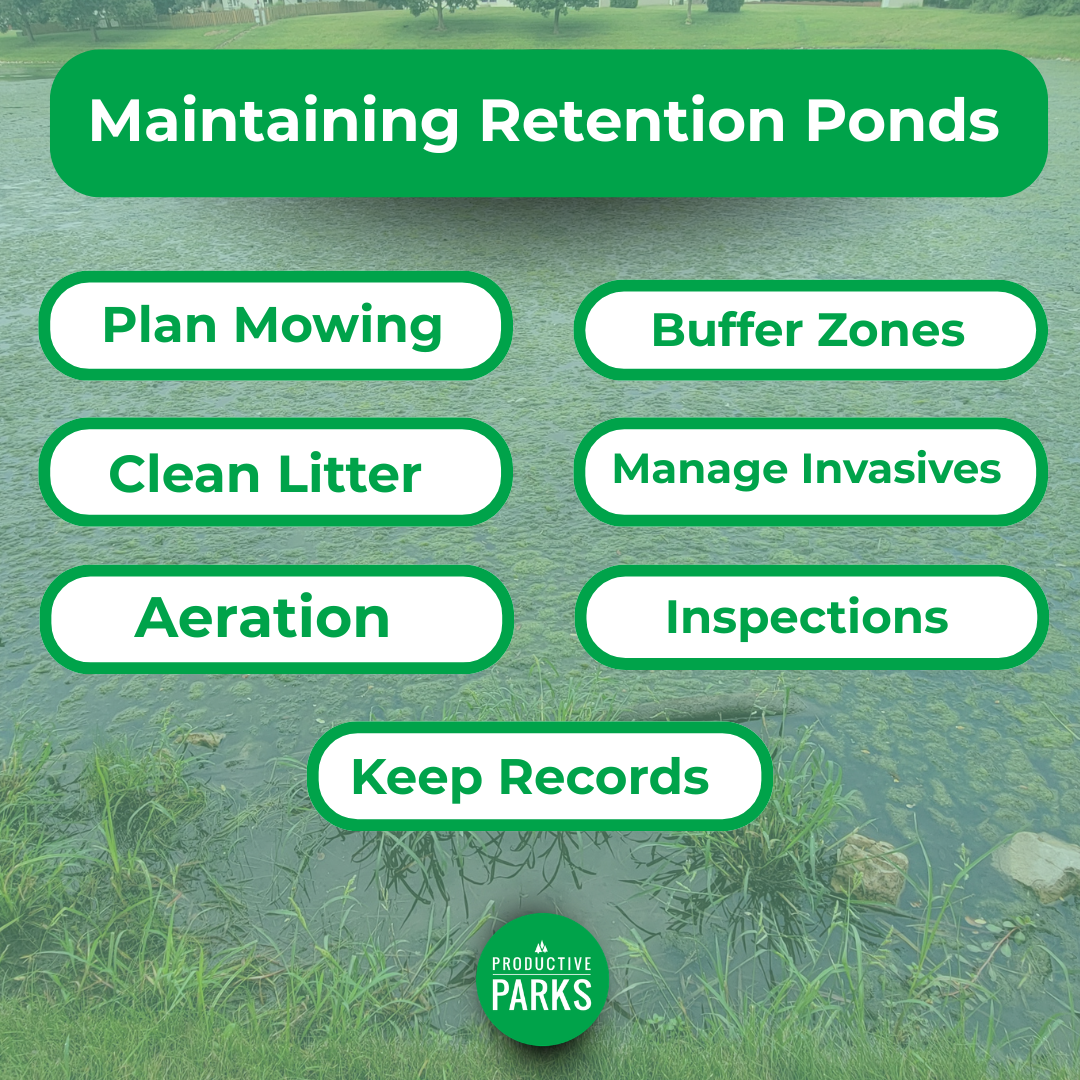
With some planning and routine care, retention ponds can continue to manage rainwater and be a cherished amenity for park visitors. Here are some ways to ensure a healthy, functioning retention pond:
Plan Mowing Patterns
If staff mow the same way each time near a retention pond, rainwater may also flow in that same route. As the rain continues to flow over the familiar path, it causes erosion and more sediment to settle in the pond.
This can be prevented by mowing around the pond in different directions. Mowing patterns should be switched routinely to prevent creating ruts and depressions in the ground.
Create a Fertilizer “Buffer Zone”
Commit to discontinuing the use of pesticides and fertilizers around the retention pond. For example, make the area 20 feet around the pond the buffer zone.
Creating a buffer zone can help reduce the amount of fertilizer runoff into the retention pond, which can lead to algae growth, aquatic plant overgrowth, and degraded water quality.
Manage Invasive Species/Introduce Native Species
Both invasive plants and wildlife can impact a pond’s overall health. Removal of non-native invasive plants and wildlife can help keep the pond’s functionality and natural ecosystem in balance.
Introducing or reintroducing native plants and wildlife to areas in and around the pond can help control erosion and attract a variety of desirable wildlife. Native plants can have stronger, deeper root systems that help hold soil in place. They can also filter polluted runoff and trap sediment.
Litter Management
Routinely checking and cleaning litter in and around ponds will ensure they are functioning properly. It will also reduce the negative impacts litter has on wildlife and the pond ecosystem.
If the pond is at a park, make sure appropriate receptacles are available for visitors to dispose of their trash.
Aeration
Pond aerators circulate a high volume of water at low pressure throughout the pond. Aeration helps stimulate natural processes and keeps pond oxygen levels high. The extra oxygen helps plants and wildlife and also stimulates aerobic bacteria that digest excess nutrients.
Aerators help enhance water quality and are an environmentally friendly alternative to chemical approaches. It’s advised to consult an expert to find the most effective aeration system for a retention pond.
Inspecting Area
Routine inspections can detect erosion, invasive species outbreaks, and clogged outlets before they become a big problem. Pilot channels and any mechanical devices (flood gates, aeration, etc.) must also be checked for functionality.
Check for areas of erosion around the shoreline. Find and remove any foreign objects that can impact the pond's functioning, like litter or fallen leaves.
Inspections should be conducted at least four times a year and 2-3 days after a large rainfall event.
Here are some line items that can be used to create your pond inspection:
- Water level and clarity — check for abnormal levels, discoloration, odor, or oil sheen
- Inlet/outlet structure condition — ensure pipes and risers are clear of blockages and debris
- Trash rack/debris screen — check for clogging or damage
- Embankment condition — look for erosion, cracking, slumping, or settling
- Animal burrows — check for muskrat or groundhog activity that could compromise the berm
- Sediment accumulation — assess buildup in the forebay/basin affecting storage capacity
- Vegetation condition — flag overgrowth, invasive species, or woody growth on the embankment
This isn’t an all-encompassing list, but it covers a general inspection. More or modified line items may be needed for your specific pond.
Keep Records
One way to make it easier to plan for future pond maintenance is keeping records of work completed. Having a spot to access mowing records, repairs, and general maintenance can give insights into the overall health of the pond and allow you to budget the time and resources needed to maintain it.
Records can be saved in a file or spreadsheet. Maintenance management software can also be helpful for planning and implementing a pond maintenance routine.
The Takeaway
A retention pond serves as a key resource in stormwater management. It can also be a park amenity that attracts visitors. With proper monitoring and care, retention ponds can maintain their functioning and appearance while being a healthy habitat for local plants and wildlife.